Crosstex
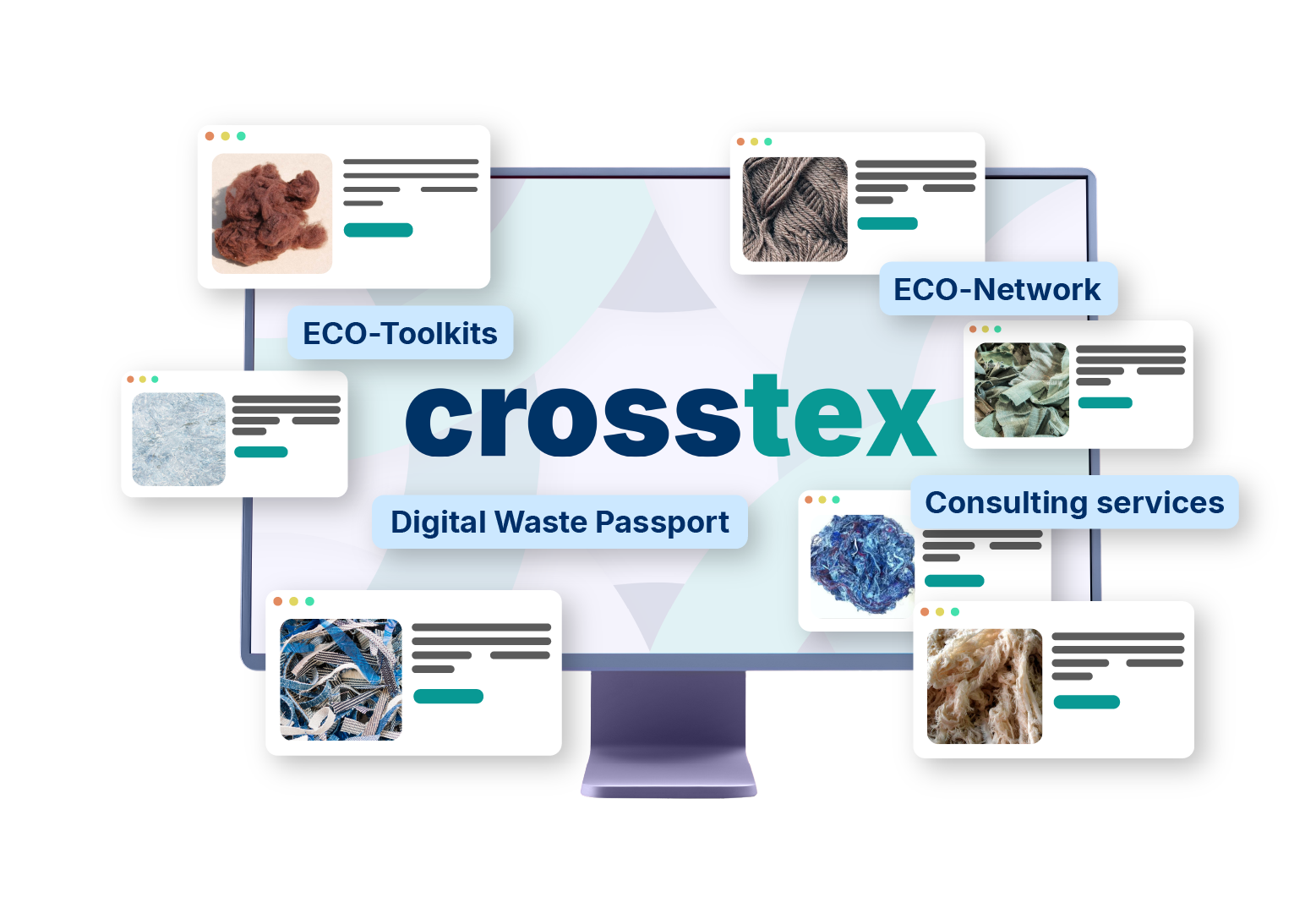
Crosstex is part of the PNRR MICS project. It is a service ecosystem within a digital platform designed to guide and support SMEs, start-ups, and research centers in textile districts toward a circular and sustainable transition.
My role
UX & Service Design: Designed the user experience with a focus on textile waste reuse, applying UX and Service Design methodologies.
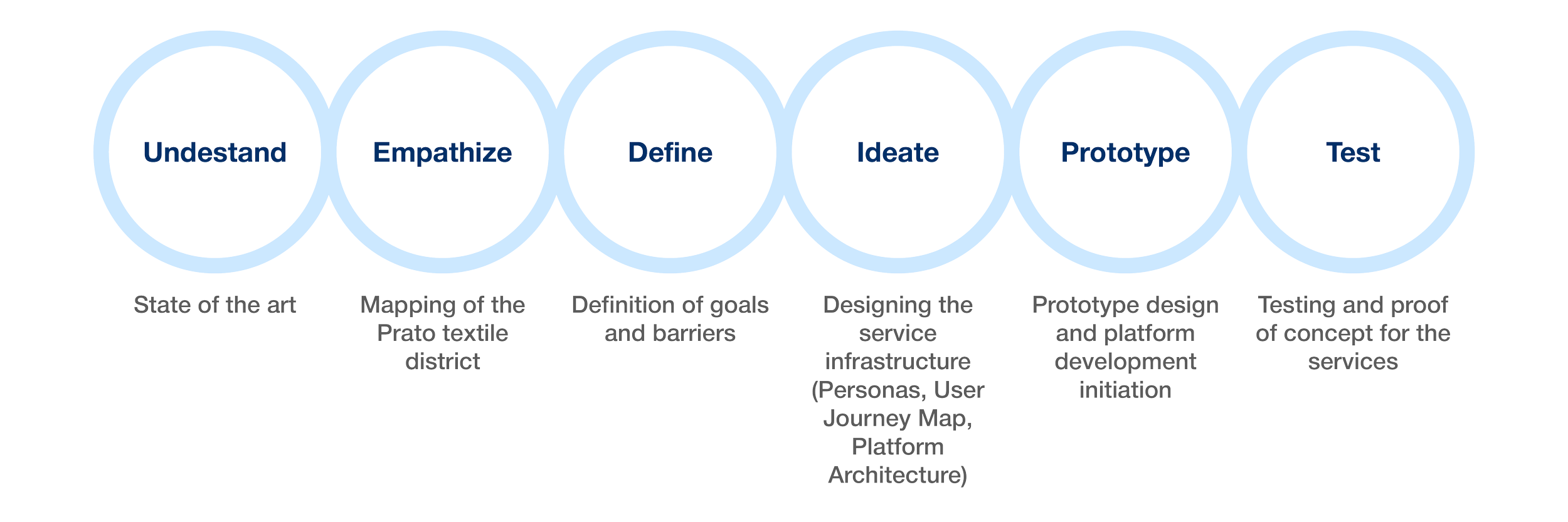
Design Thinking Process: Managed the entire process (Empathize, Define, Ideate, Prototype, Test), conducting Stakeholder Mapping, User Analysis, and creating Personas, User Journeys, and Blueprints.
Prototyping: Designed wireframes and developed a high-fidelity prototype on Figma (currently in development).
Usability Testing: Conducted tests with textile companies to refine the platform.
Visual Identity: Developed the logo, illustrations, and brand guidelines.
Project brief
The textile sector faces challenges related to sustainability and digitalization. Traceability tools can accelerate the digital & green transition by enhancing the value of waste and by-products, closing the loop of the circular economy. Tracking textile waste and promoting eco-design will facilitate recycling and reuse, while synergies among stakeholders will create new market opportunities.
In Italy, the sector generates approximately 100,000 tons of textile waste annually (2019), with 73% recycled and 27% disposed of (ISPRA). The introduction of EPR (Extended Producer Responsibility) will support investments to improve collection, sorting, and recycling. Moreover, industrial clusters in sectors such as automotive, nautical, and construction offer opportunities for high-quality recycled materials.
To overcome market challenges for recycled products, it is essential to adopt traceability technologies (Blockchain, IoT, AI), create digital hubs for collaboration, and promote incentives and training. Expected outcomes include greater transparency, reduced environmental impact, and increased competitiveness in recycling, turning the green transition into a tangible opportunity for the sector.
Crosstex is a digital platform that connects pre-consumer textile waste with new industrial uses, enabling material recovery and circular innovation across sectors.
The goal
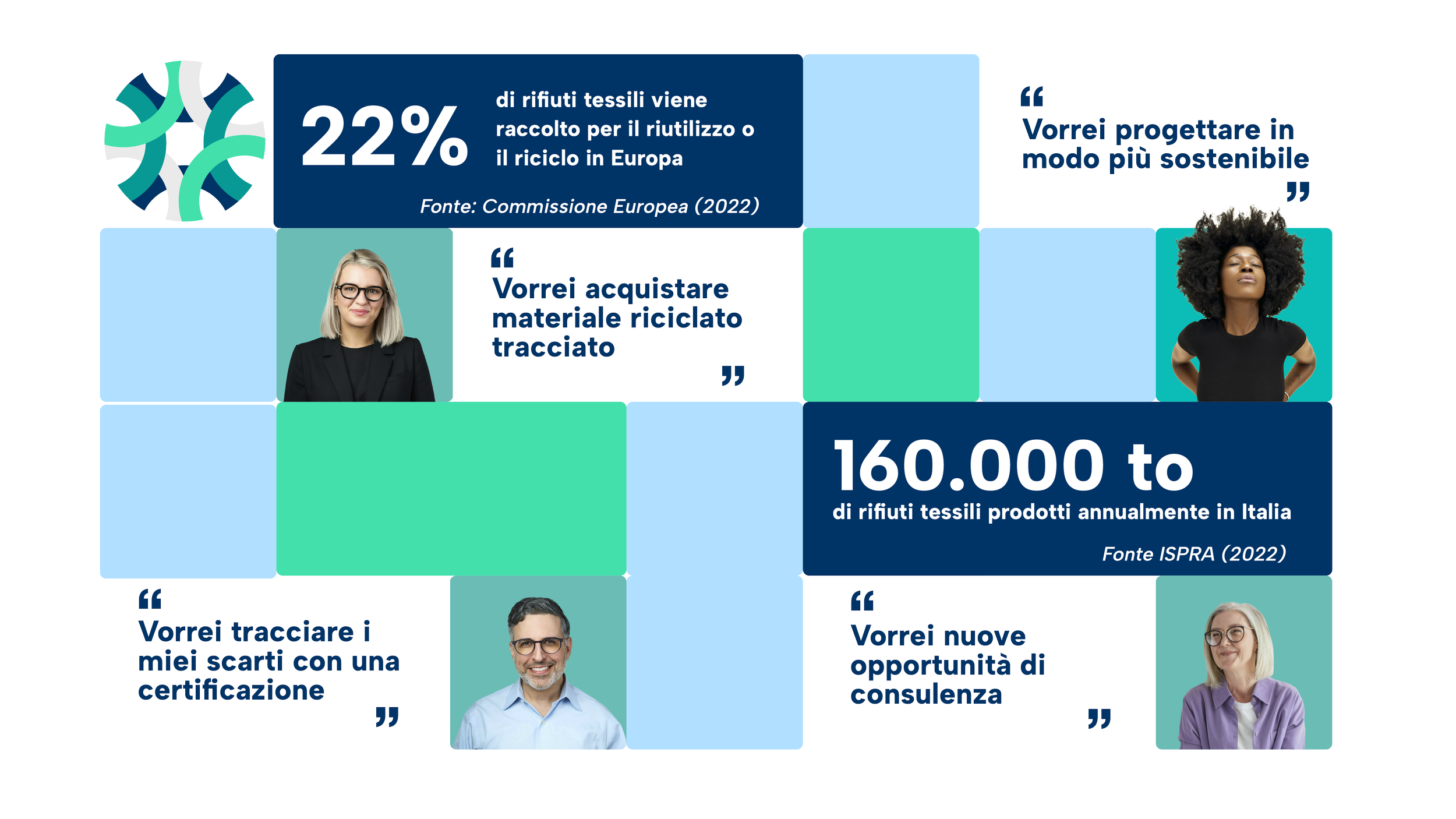
Context of the research
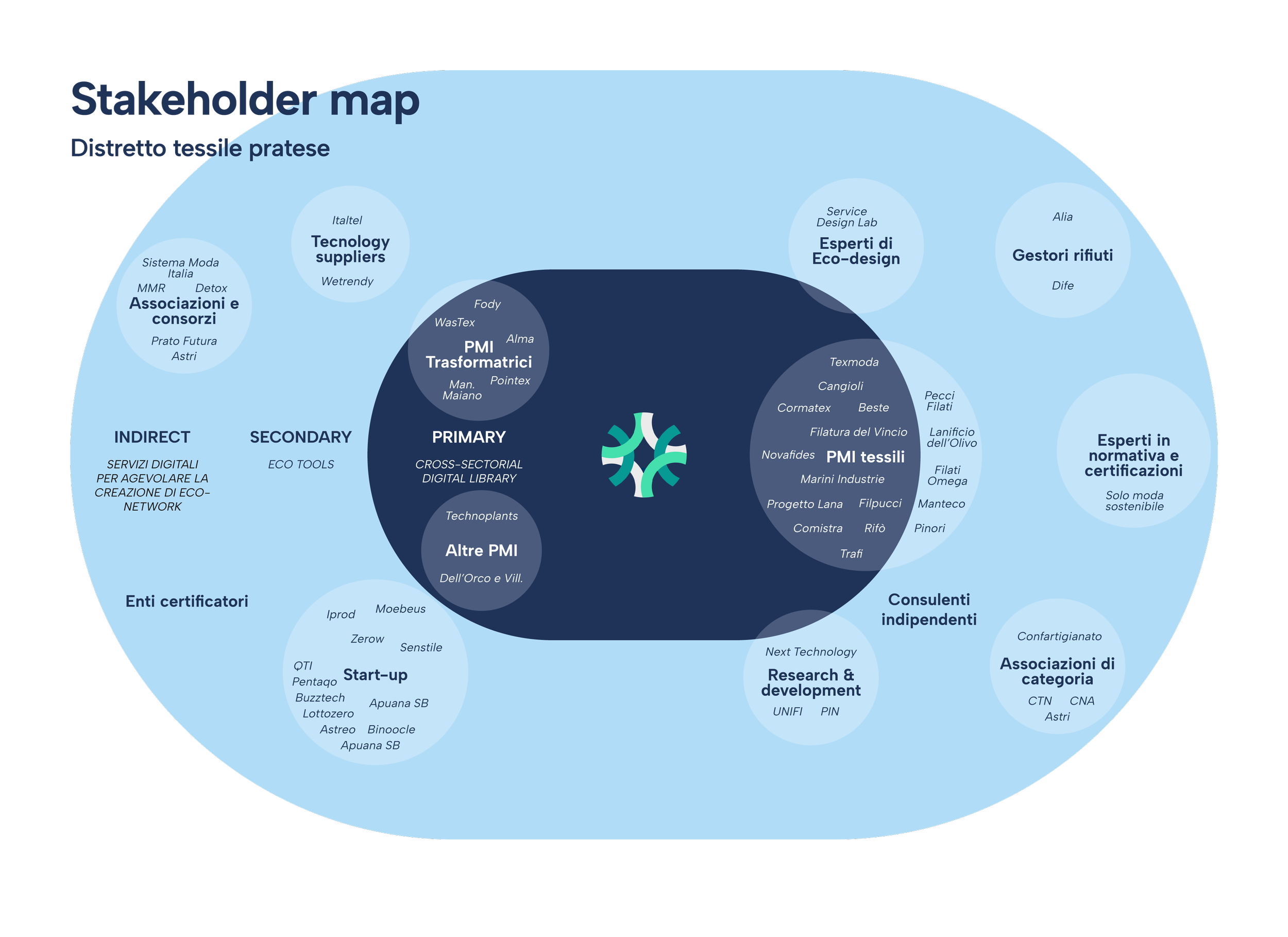
Crosstex connects 8 different types of users.
Users
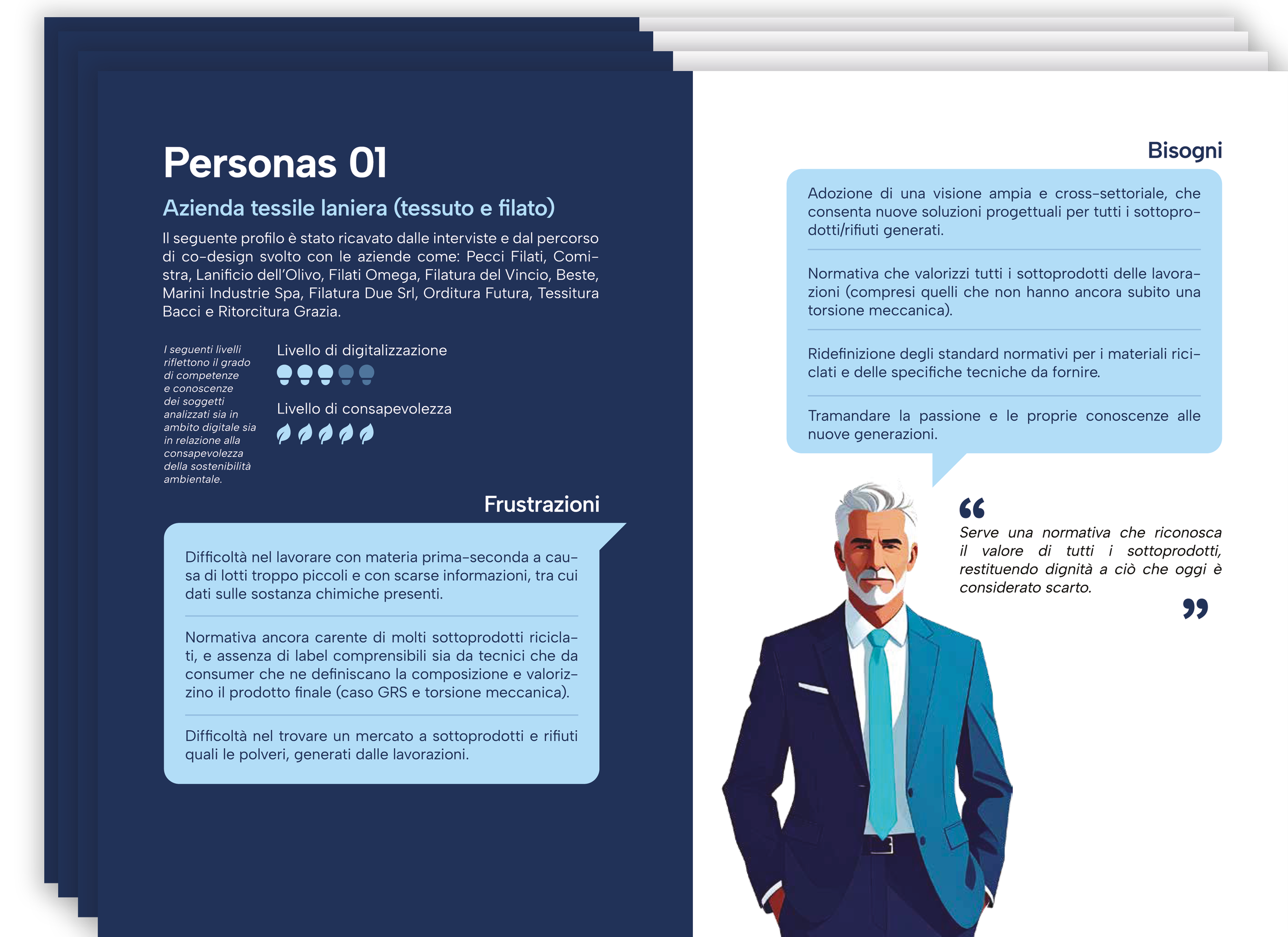
I defined user personas to better understand the platform’s users.
Personas
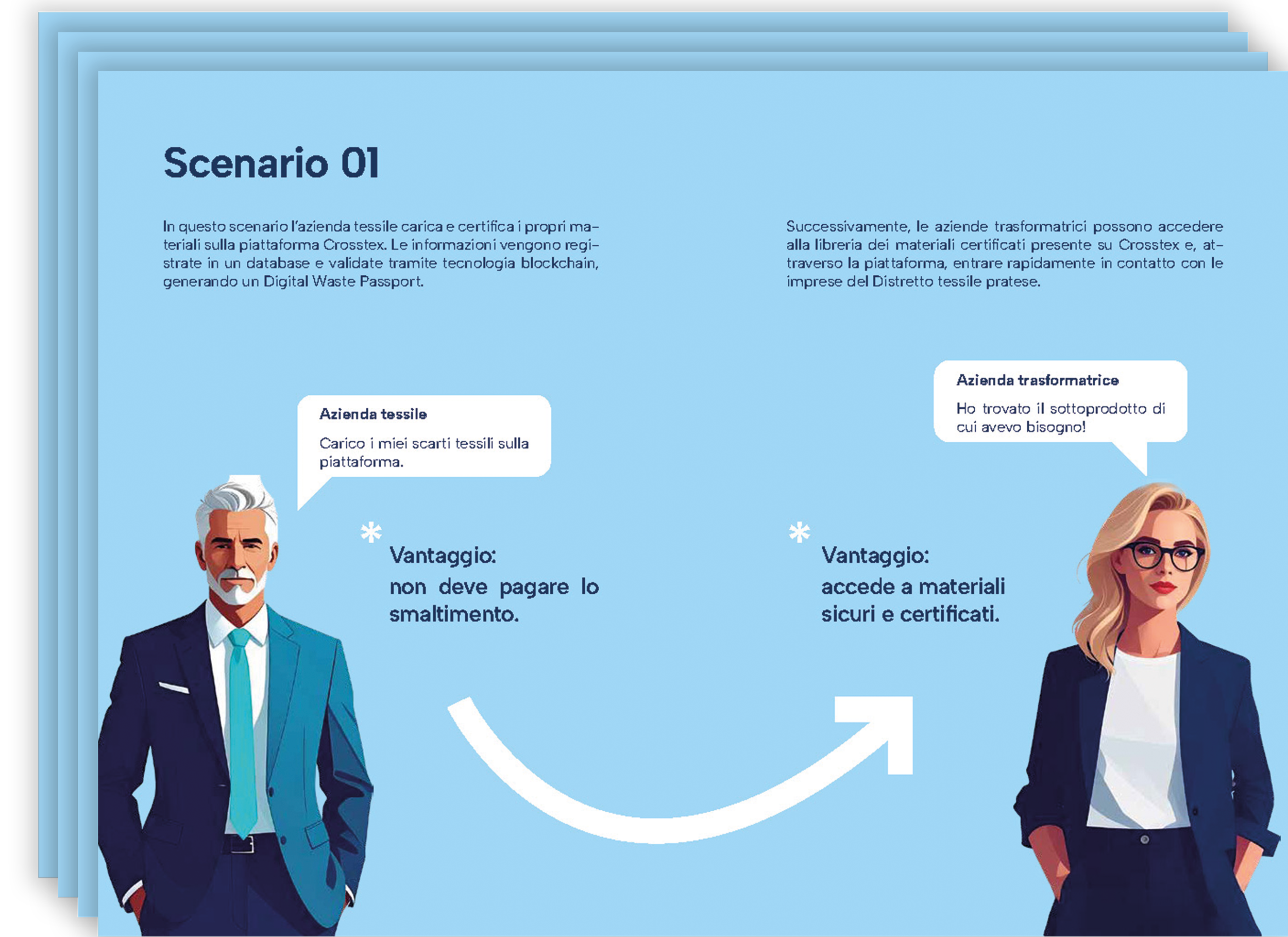
I developed user scenarios to represent the platform’s key usage contexts.
User scenarios
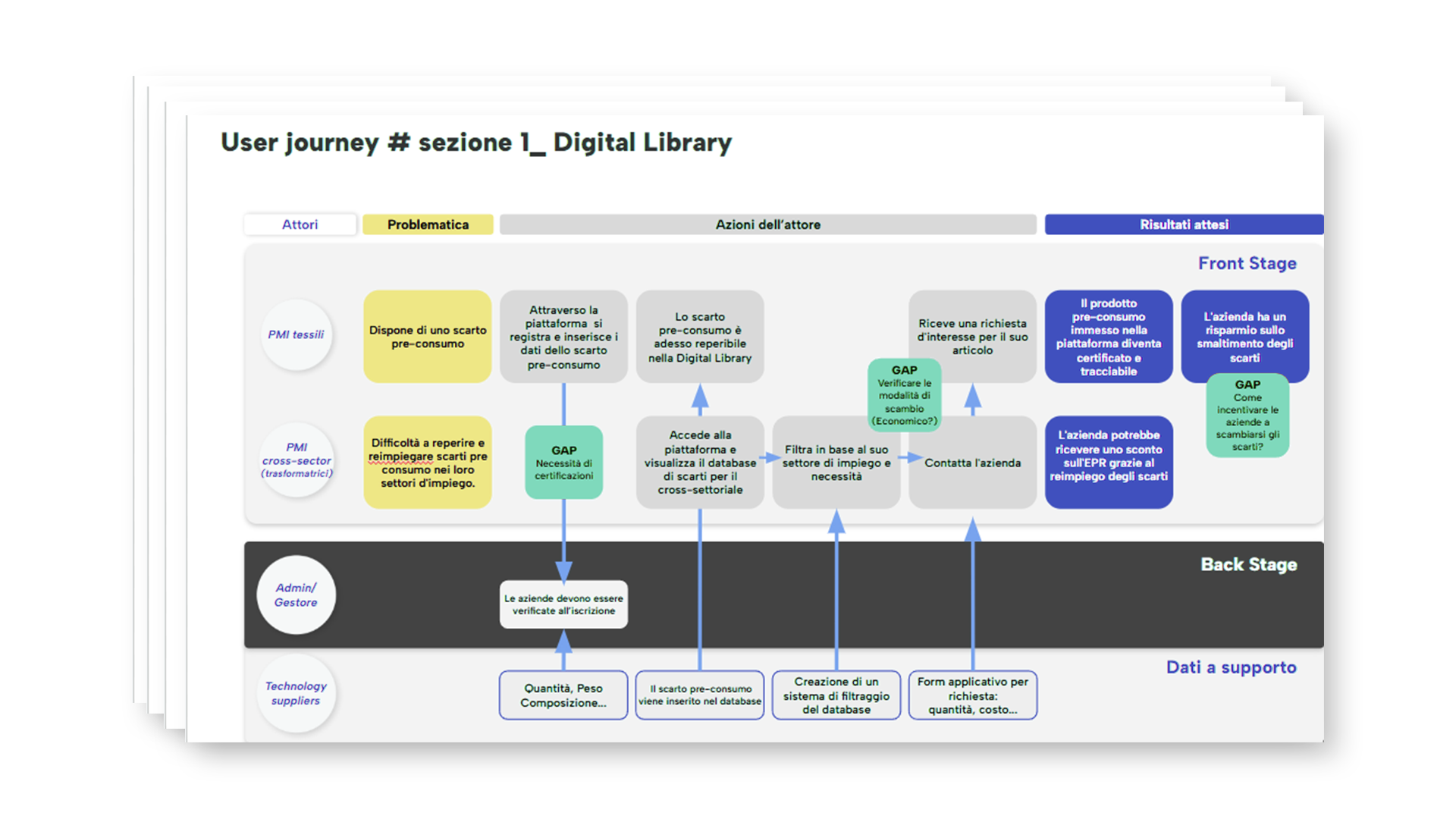
I created user journeys for each section of the platform.
User Journey
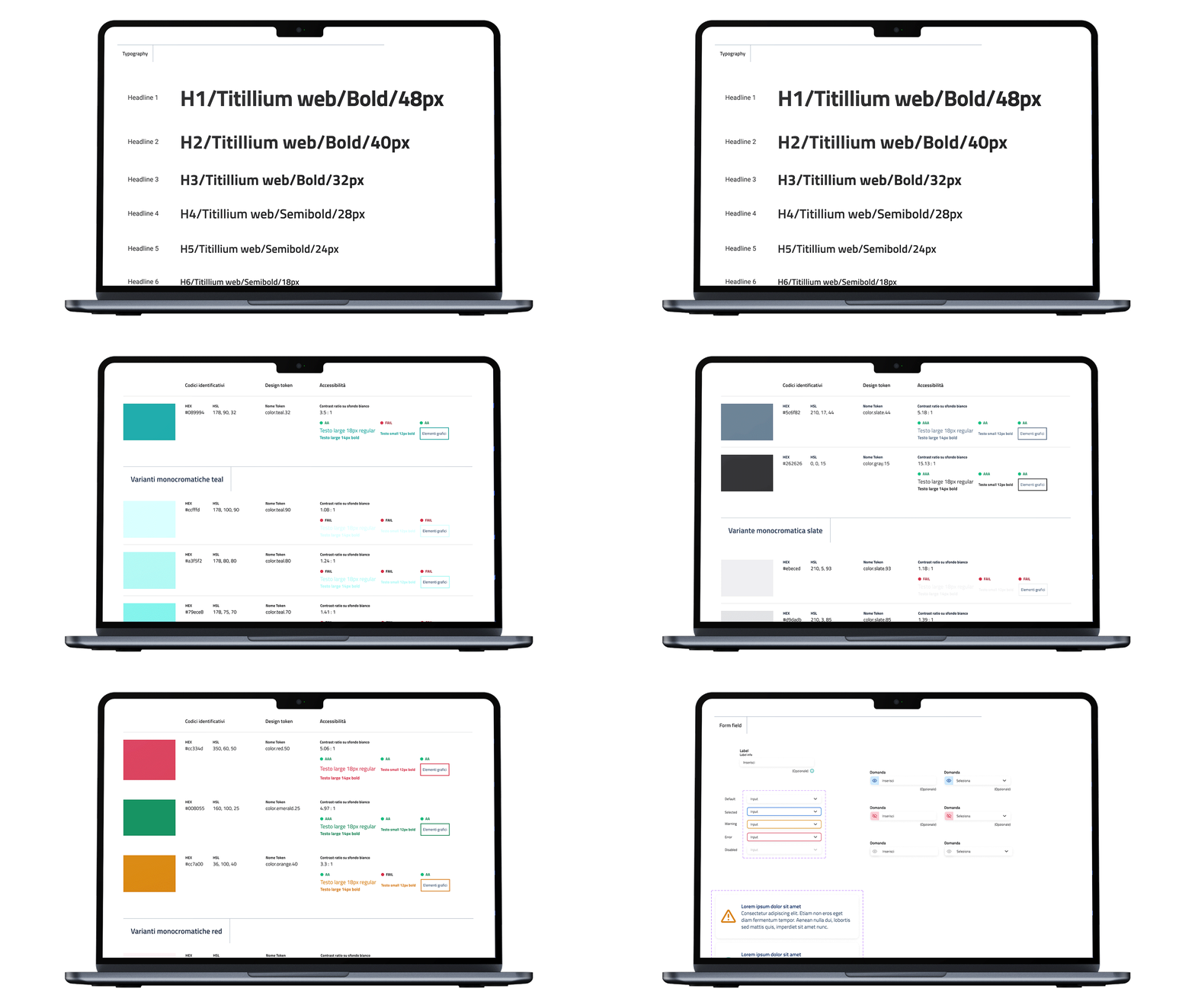
I developed a custom Design System for the platform, defining spacing, colors, typography, and custom components.
Design System